No products in the cart.
Description
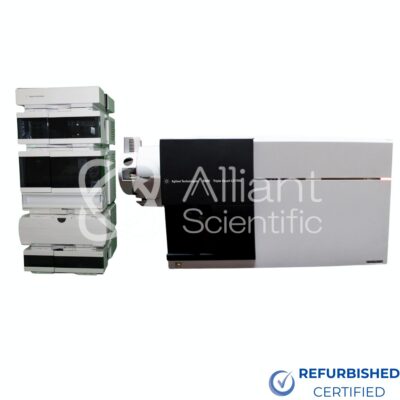
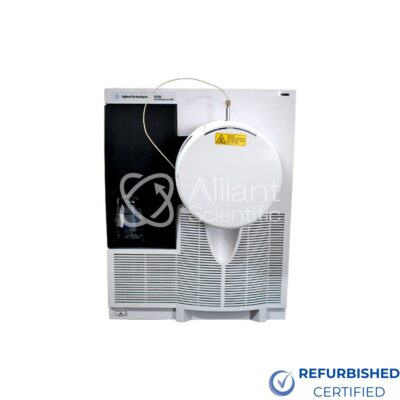
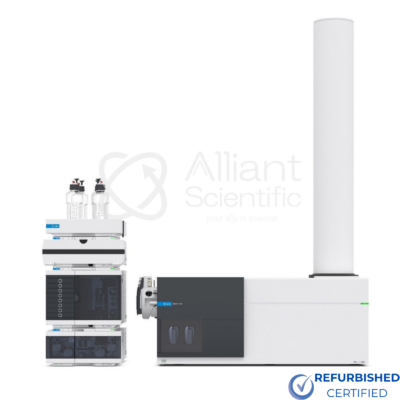
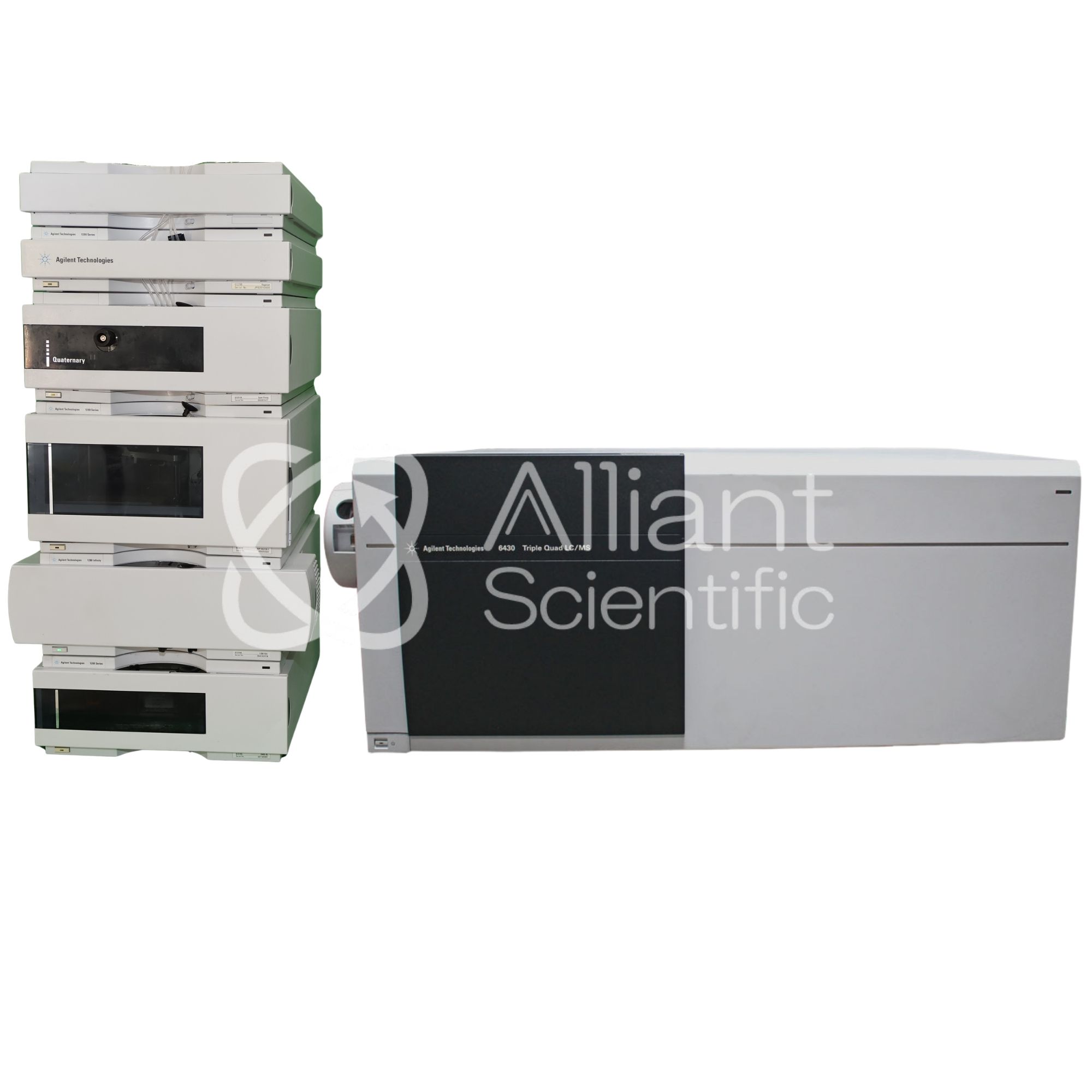
Agilent 6430 Triple Quad LC/MS with 1200 HPLC System
The Agilent 6430 Triple Quad LC/MS with 1200 HPLC system is a reliable and cost-effective analytical platform designed for sensitive and selective quantitative analysis across a wide range of laboratory applications. This integrated configuration combines robust chromatographic separation with targeted mass spectrometry detection, enabling accurate measurement of trace-level compounds in complex sample matrices.
The system provides stable solvent delivery and consistent gradient formation, supporting reproducible chromatographic performance across routine and multi-method workflows. Efficient degassing and precise flow control contribute to low baseline noise and improved retention time stability, which are critical for reliable analytical results. Automated sample introduction ensures high injection precision and repeatability, while minimizing carryover between runs. Temperature-controlled separation conditions further enhance reproducibility, ensuring stable chromatographic behavior when working with complex or variable sample compositions.
The triple quadrupole mass spectrometer enables highly selective detection using Multiple Reaction Monitoring (MRM), allowing accurate quantification of target analytes even in the presence of significant matrix interference. Optimized ionization and signal stability ensure consistent performance across extended analytical sequences. Overall, the Agilent 6430 LC/MS system delivers a balanced combination of sensitivity, selectivity, and operational reliability, making it well suited for pharmaceutical analysis, environmental testing, food safety applications, and general chemical analysis.
This refurbished Agilent 6430 Triple Quad LC/MS system has been fully tested and verified to be in proper working condition by Alliant Scientific.
Includes:
- Agilent 6430 Triple Quad LC/MS
- ESI Source
- Vacuum Pump
- Agilent 1200 HPLC System
- Solvent Tray
- G1379B Degasser
- G1311A Quaternary Pump
- G1367D Hip-ALS SL+ Autosampler
- G1316A TCC
- G1314C VWD SL
- Data System
- 90 Day Warranty Coverage
Optional:
- Premium refurbishment available with extended warranty options
Disclaimer: All brand names and trademarks are the property of their respective owners and are used for identification only. We are not an authorized dealer. Software, if included, is not transferable or upgradable.
Technical Specifications
| Agilent 6430 LC/MS Triple Quadrupole with 1200 HPLC System | |
| System Type | Triple quadrupole LC/MS system with integrated HPLC front-end |
| Mass Analyzer | Triple quadrupole (QqQ) configuration for quantitative analysis |
| Scan Modes | MRM, SIM, and full scan acquisition |
| Ionization Source | Electrospray ionization (ESI) with optional APCI compatibility |
| Mass Range | Up to m/z ~3000 |
| Sensitivity | Reliable sensitivity for routine trace-level analysis |
| Dynamic Range | Wide dynamic range for quantitative accuracy across concentrations |
| LC Pump | Quaternary pump with low-pressure gradient mixing capability |
| Flow Rate Range | 0.001 – 10 mL/min |
| Degassing | Integrated vacuum degasser for continuous gas removal |
| Sample Introduction | Automated injection with high precision and low carryover |
| Injection Volume Range | ~0.1 – 100 µL |
| Column Compartment | Thermostatted column compartment (TCC) for controlled separations |
| Temperature Range | Ambient to ~80°C |
| Detector | UV Variable Wavelength Detector (VWD SL) |
| Automation | Sequence-based operation for batch workflows |
| Power Requirements | 100 – 240 V, 50/60 Hz |
Additional information
| Availability | |
|---|---|
| Brand | |
| Condition | |
| Model | |
| Onsite Installation | |
| Warranty |
Key Features
| Triple Quadrupole Detection | Provides selective and sensitive quantification using MRM transitions |
| Reliable Quaternary Gradient Control | Supports flexible solvent blending for varied analytical methods |
| Stable Baseline Performance | Degassing reduces noise and improves signal consistency |
| High Injection Precision | Autosampler ensures repeatable and accurate sample introduction |
| Temperature-Controlled Separation | Improves retention time stability and chromatographic reproducibility |
| Low Carryover Operation | Enhances data quality in sequential analyses |
| Trace-Level Detection Capability | Suitable for low-abundance compounds in complex matrices |
| Efficient Workflow | Supports automated batch processing for high-throughput applications |
Applications
| Pharmaceutical LC/MS Analysis | Quantification of APIs, impurities, and drug metabolites |
| Bioanalytical Testing | Measurement of compounds in plasma, serum, and biological samples |
| Environmental LC/MS Testing | Detection of pesticides, contaminants, and pollutants |
| Food Safety Analysis | Identification of residues, additives, and contaminants in food products |
| Toxicology Screening | Detection of drugs and toxic compounds in complex matrices |
| Chemical Analysis | Characterization of mixtures and trace-level components |
Frequently Asked Questions (FAQ)
| What type of analysis is the Agilent 6430 LC/MS system best suited for? | It is ideal for targeted quantitative analysis of compounds in complex sample matrices using selective mass transitions. |
| How does triple quadrupole technology improve analytical performance? | It uses sequential mass filtering and fragmentation to reduce interference and improve sensitivity for target compounds. |
| What is the advantage of MRM detection? | MRM enables highly selective monitoring of specific ion transitions, improving detection accuracy and sensitivity. |
| What types of compounds can this system analyze? | The system is suitable for pharmaceuticals, environmental contaminants, food residues, and organic compounds. |
| How does the HPLC front-end improve LC/MS performance? | It separates complex mixtures prior to detection, reducing matrix effects and improving accuracy. |
| Is this system suitable for routine laboratory use? | Yes, it is widely used for routine quantitative analysis due to its reliability and reproducibility. |
| What factors affect reproducibility in LC/MS analysis? | Stable flow rates, precise injection, controlled temperature, and consistent ionization all contribute to reproducible results. |
| Can this system support high-throughput workflows? | Yes, automated sample handling enables efficient batch processing. |