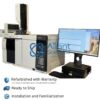
Purchasing Pre‑Owned Laboratory Instruments: A Practical Guide for Smart, Safe, and Cost‑Effective Buying
Purchasing pre‑owned laboratory instruments can be one of the most strategic decisions a lab makes. When done correctly, it accelerates timelines, reduces capital expenditure, and supports sustainability goals. When done poorly, it leads to delays, hidden costs, and operational headaches.
This guide breaks down the real advantages, the risks buyers often underestimate, and the essential steps to ensure you receive a reliable instrument the first time.
Why Consider Pre‑Owned Instruments?
Fast Availability
OEM lead times for major instruments can stretch for months. Even initial engagement with a manufacturer’s sales team can take days. In contrast, the pre‑owned market often offers immediate availability, with many systems ready to ship within days.
Substantial Cost Savings
Depending on the instrument type, buyers can save 40% to 90% compared to OEM pricing. For labs with limited budgets or urgent project needs, this cost efficiency can be transformative.
Environmentally Responsible
Redeploying high-value scientific equipment reduces waste and extends the lifecycle of complex instruments. For organizations with sustainability mandates, pre‑owned equipment is a meaningful way to reduce environmental impact.
The Risks: What Buyers Often Overlook
While the benefits are compelling, the pre‑owned market is not without hazards. These risks vary significantly depending on the source—auctions versus vendors—and understanding the difference is essential.
Understanding the Risks: Auctions vs. Vendors
Not all pre‑owned sources are equal. The risks vary dramatically depending on where the instrument comes from.
The Realities of Buying from Auctions
Auctions may look appealing due to low starting bids, but they come with significant structural disadvantages.
“As‑Is, Where‑Is” — No Guarantees
Auction items are sold with no testing, no warranty, and no recourse. Many units sent to auction are:
Nonfunctional
Scavenged for parts
Assembled from leftover components
It’s common for sellers to consolidate the unusable remnants of multiple broken instruments into a single “complete” unit and send it to auction.
Packaging and Shipping Risks
Auction houses do not deinstall or prepare instruments for transport. Buyers must hire third‑party packers who often lack experience with scientific equipment. The result is frequently:
Cut cables
Damaged optics
Broken fittings
Compromised modules
Hidden Costs and Overbidding
Buyers often overlook:
20% auctioneer fees
Packaging and freight charges
Repair and replacement costs
By the time the instrument arrives—and is found to be nonfunctional—the total cost often exceeds what a reputable dealer would have charged for a tested, warrantied system.
When Auctions Make Sense
Only when:
The auction is local
The instrument is still installed on the bench
You can inspect, deinstall, and transport it
Otherwise, auctions are a gamble that often ends in disappointment.
Buying from Vendors: Safer, Faster, but Still Buyer Beware
Purchasing from a vendor is generally safer than buying from an auction, but the market is crowded with resellers who lack technical expertise.
Misleading Terminology
Terms like refurbished, like new, excellent condition, and fully tested are used loosely. There is no industry standard.
A reputable vendor should provide:
A documented refurbishment protocol
A list of replaced parts
Performance test results
Serial numbers confirming they possess the instrument
Vague or evasive answers are red flags!
Cosmetic Appearance Is Not Performance
Buyers often focus on the wrong criteria. Scratches and dents do not determine reliability. Conversely, a pristine exterior can hide contamination, mechanical wear, or failing components.
What truly matters:
Verified performance
Reliability
Serviceability
Vendor expertise
Expecting “Like New” Performance
A pre‑owned instrument—like a 10‑year‑old car—will never be identical to a brand‑new unit. It can be excellent, reliable, and fully functional, but it will not be factory‑fresh.
How to Protect Your Investment
Evaluate the Vendor’s Reputation
A reputable dealer invests heavily in technical staff. A qualified field service engineer costs well over $150,000 per year. Vendors who employ multiple FSEs are far more likely to stand behind their work and support you long after the sale.
Ask About Installation and Training
Even if you don’t need installation for the specific instrument you’re buying, the vendor’s ability to provide it is a strong indicator of technical competence.
A vendor who can install and train on GC‑MS, LC‑MS and ICS systems is unlikely to abandon you when issues arise.
Request Documentation Before Shipping
You should receive:
Performance test data
A list of replaced parts
A refurbishment protocol
Warranty terms
If the vendor cannot provide these, reconsider.
Understand Warranty vs. “Right of Return”
A 30‑day right of return is not a substitute for testing or warranty. It simply shifts the burden to you:
You receive a nonfunctional instrument
You must arrange repacking and shipping
You wait for a refund
You lose weeks of productivity
A properly tested, warrantied instrument avoids this entire cycle.
Conclusion: Aim for a One‑Shot Success
The goal of purchasing a pre‑owned instrument is simple: Acquire a reliable system the first time—without repair cycles, returns, or downtime.
A reputable dealer may cost 10–20% more, but the value of expertise, documentation, warranty, and support far outweighs the premium. In the long run, the cheapest option is rarely the least expensive.
We use cookies to ensure that we give you the best experience on our website. If you continue to use this site we will assume that you are happy with it.