Description
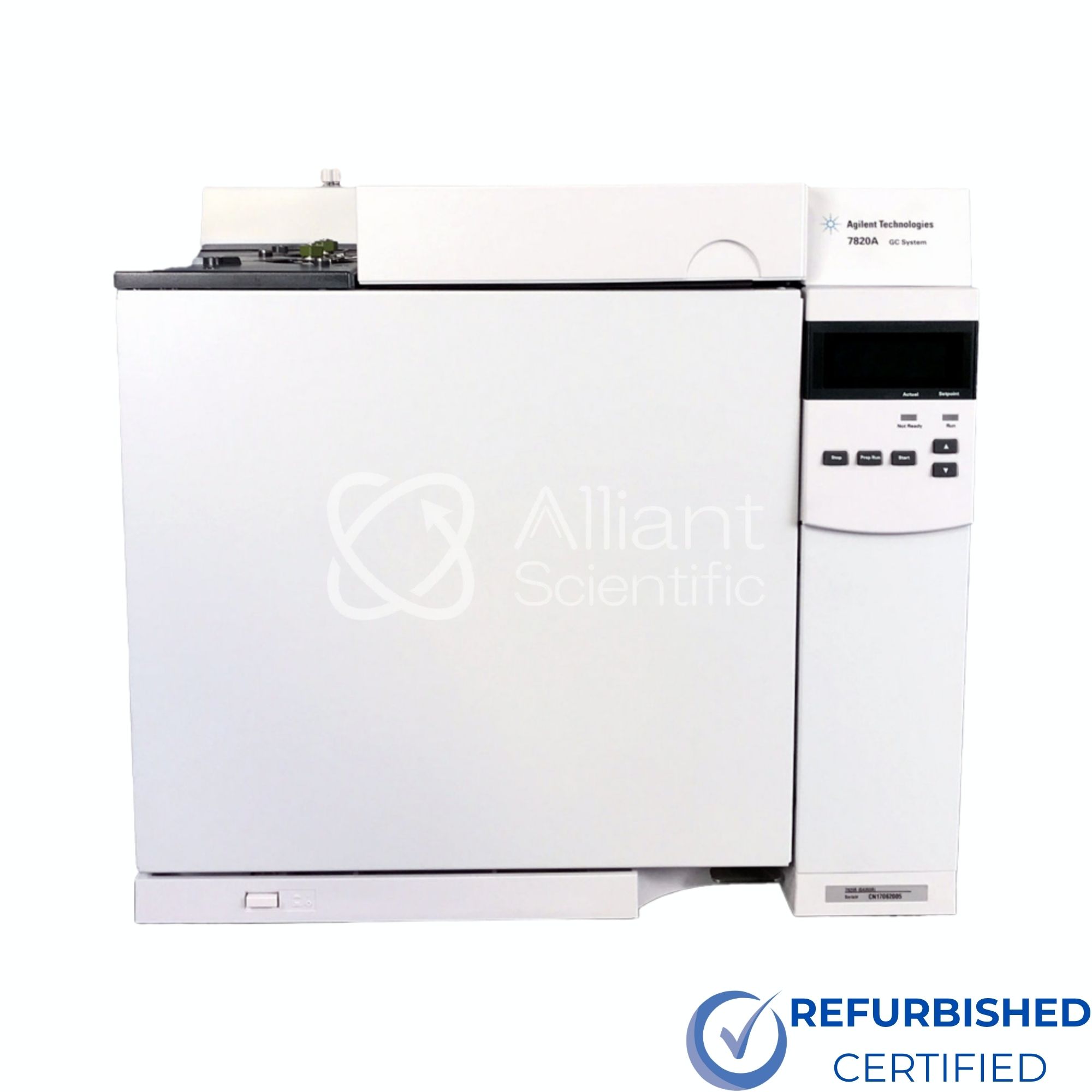
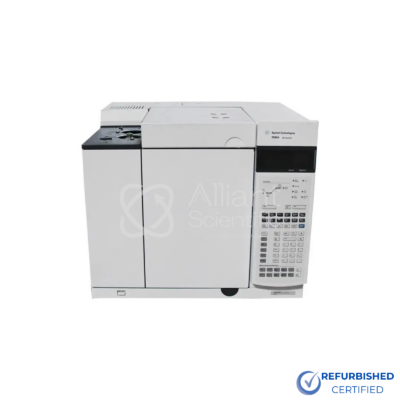
Agilent 7820 GC System Overview
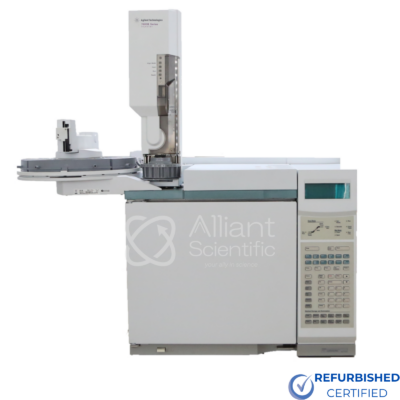
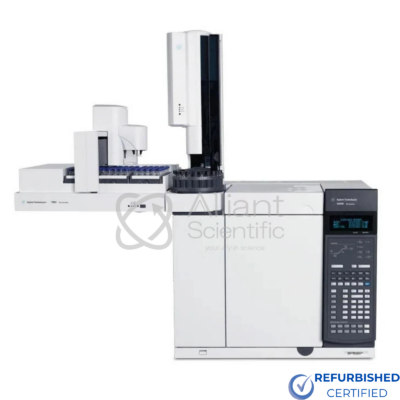
The Agilent 7820 GC system is a bench-top gas chromatograph engineered for reproducible separation and quantification of volatile and semi-volatile compounds using capillary column technology. Configured with a single heated inlet and a flame ionization detector (FID), this system is optimized for routine analytical workflows requiring stable baseline performance and high sensitivity toward hydrocarbons and carbon-containing species. The system incorporates electronic pneumatic control (EPC) to regulate carrier gas pressure and flow with high precision, ensuring consistent retention times and improved analytical repeatability across runs. The oven assembly provides controlled temperature ramping with uniform heat distribution, supporting complex multi-component separations.
The single inlet configuration enables flexible sample introduction for trace-level and concentrated samples. The FID detector utilizes hydrogen-air flame ionization to generate a signal proportional to the mass of carbon entering the detector, offering wide linear dynamic range and minimal sensitivity to non-combustible gases such as water, COâ‚‚, and permanent gases. This configuration is commonly deployed in laboratories performing quantitative hydrocarbon profiling, residual solvent analysis, and VOC characterization, where robustness, method repeatability, and long-term operational stability are critical.
This Agilent 7820 GC- FID System is offered fully refurbished and tested, in working condition.
Includes:
- Agilent 7820 (G4350A) Gas Chromatograph (GC)
- Single Split/Splitless Inlet (SSL)
- Single Flame Ionization Detector (FID)
- Data System
- 90-Day Warranty Coverage
Optional:
- Autosampler (7683 & 7693 Series)
- Premium refurbishment available with extended warranty options
Disclaimer:Â All brand names and trademarks are the property of their respective owners and are used for identification only. We are not an authorized dealer. Software, if included, is not transferable or upgradable.
Technical Specifications
| General | |
|---|---|
| Instrument Type | Gas Chromatograph (GC) |
| Model | Agilent 7820 |
| Configuration | Single channel GC system |
| Application Range | Quantitative analysis of volatile and semi-volatile organic compounds |
| Inlet System | |
| Inlet Configuration | Single inlet |
| Inlet Type | Split / Splitless |
| Temperature Range | Up to ~400°C (configuration dependent) |
| Control | Electronic Pneumatic Control (EPC) |
| Oven | |
| Temperature Range | Ambient +4°C to ~450°C |
| Ramp Programming | Multi-step programmable temperature gradients |
| Cooling | Forced-air cooling |
| Detector (FID) | |
| Type | Flame Ionization Detector (FID) |
| Detection Principle | Ionization of organic compounds in hydrogen-air flame |
| Sensitivity | High sensitivity to hydrocarbons (pg carbon level) |
| Dynamic Range | ~10^7 linear range |
| Ignition | Electronic ignition |
| Required Gases | Hydrogen, Air, Makeup gas (Nitrogen or Helium) |
| Pneumatics | |
| Control System | Electronic pressure and flow control (EPC) |
| Carrier Gas Options | Helium, Hydrogen, Nitrogen |
| System Integration | |
| Autosampler Compatibility | Compatible with Agilent liquid autosamplers |
| Software | Agilent OpenLab CDS (or equivalent) |
| Interfaces | LAN / standard instrument communication protocols |
| Physical | |
| Form Factor | Bench-top |
| Footprint | Compact laboratory GC system |
| Build | Designed for continuous routine laboratory operation |
Additional information
| Availability | |
|---|---|
| Brand | |
| Condition | |
| Model | |
| Onsite Installation | |
| Warranty |
Key Features
- Single split/splitless inlet supports both trace-level and high-concentration sample injections
- Flame Ionization Detector (FID) provides high sensitivity for hydrocarbons and organic compounds
- Wide linear dynamic range (~107) enables accurate quantitation across varying concentrations
- Electronic Pneumatic Control (EPC) ensures precise and reproducible gas flow and pressure regulation
- Programmable oven with multi-step temperature gradients for complex separations
- Stable baseline performance for consistent quantitative results
- Compatibility with Agilent autosamplers for automated sample introduction
- Compact benchtop design optimized for routine laboratory workflows
- Low selective response to water and permanent gases improves analytical specificity
- Designed for continuous operation in quality control and production environments
Applications
- Hydrocarbon profiling in petrochemical and energy laboratories
- Volatile organic compound (VOC) analysis in environmental testing
- Residual solvent analysis in pharmaceutical and chemical production
- Food and beverage quality control and contamination testing
- Industrial process monitoring and gas composition analysis
- Academic and research laboratories performing routine GC analysis
- Forensic and regulatory testing of organic compounds
- Quality assurance testing in manufacturing environments
Operating Guide – Agilent 7820A GC System
Frequently Asked Questions (FAQ)
What types of compounds can the Agilent 7820 GC analyze?
The system is designed for the analysis of volatile and semi-volatile organic compounds, particularly hydrocarbons, using capillary gas chromatography with flame ionization detection.
Why is an FID detector used in this system?
The flame ionization detector provides high sensitivity to carbon-containing compounds, a wide linear dynamic range, and stable response, making it suitable for quantitative analysis of organic species.
Is the single inlet suitable for different sample concentrations?
Yes, the split/splitless inlet allows flexible operation, enabling both trace-level detection (splitless mode) and analysis of higher concentration samples (split mode).
Can the system be automated?
The Agilent 7820 GC is compatible with autosamplers, allowing automated injection sequences to improve throughput and reproducibility.
What industries commonly use this GC system?
It is widely used in environmental testing, petrochemical analysis, pharmaceuticals, food safety laboratories, and academic research environments.
What gases are required for operation?
Typical operation requires a carrier gas (helium, hydrogen, or nitrogen) and detector gases including hydrogen and air for the FID, along with a makeup gas if configured.
“